LONG TERM AQUADUCT MONITORING
2025
Project Overview
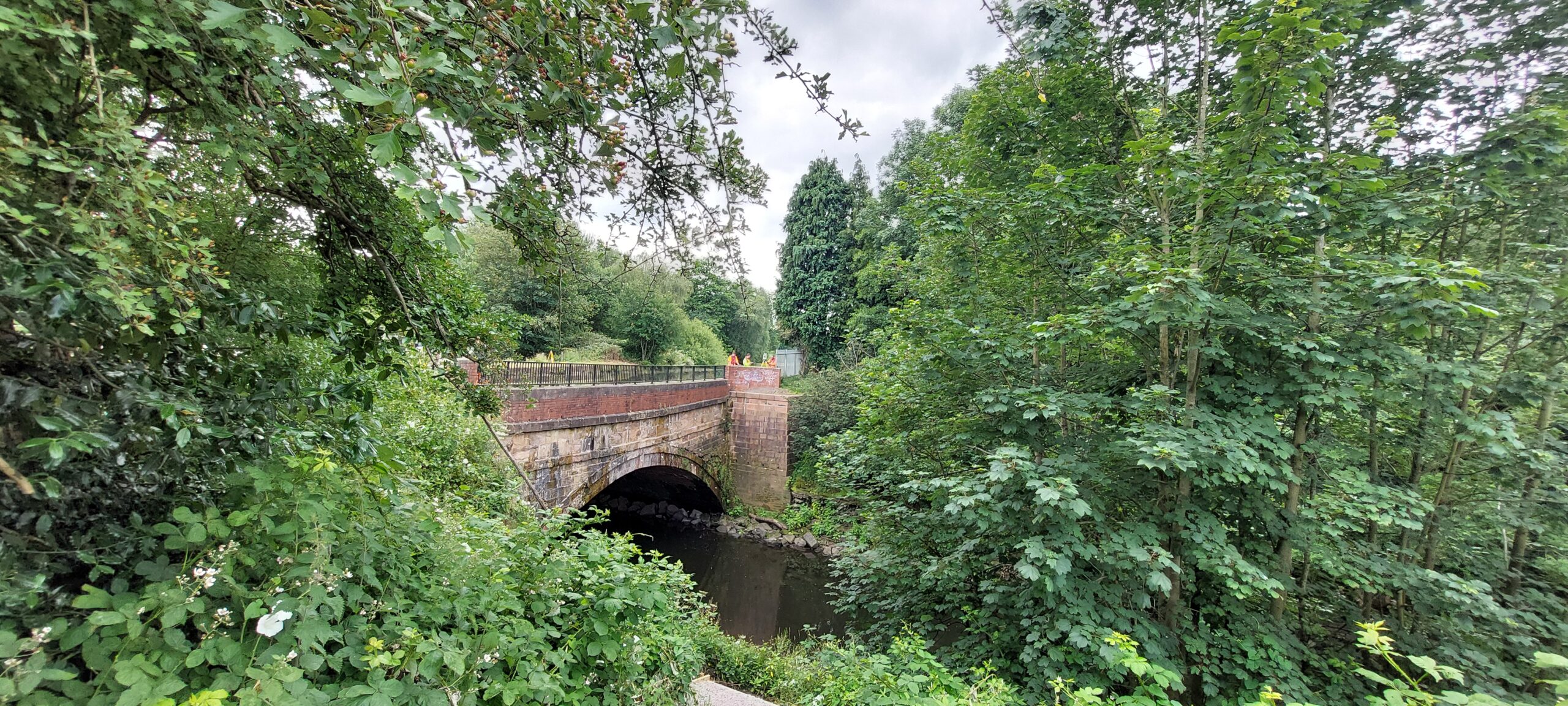
Malcolm Hughes has been commissioned to carry out long-term structural monitoring at Barfoot Aqueduct. Our role is to implement a bespoke monitoring solution designed to detect and track any gradual structural movement, deformation or settlement over time. Carrying the Bridgewater Canal high over the River Mersey, the Barfoot Aqueduct is a vital piece of North West England’s industrial infrastructure. Part of the historic Bridgewater Canal and often referred to as Britain’s first true canal, the aqueduct plays a quiet but essential role in supporting one of the country’s oldest and busiest leisure waterways.
Deliverables
This project requires us to use traditional methods of long term structural monitoring. Using Total Station observations to a network of precisely positioned targets, and levelling bolts and studs. This allows for the early identification of any trends or anomalies and provides our client with actionable insight and the ability to make informed maintenance decisions before issues escalate.
With increasing pressures from weather extremes, ageing infrastructure, and public safety expectations, long-term monitoring is becoming a key part of asset management strategies across the civil engineering and heritage sectors. In a structure with such historic value, this proactive approach offers reassurance that the aqueduct’s heritage can be preserved without compromising on safety or performance. It also supports wider canal management goals, ensuring the Bridgewater Canal network remains resilient for generations to come.
Challenges
Much of the Aquaduct structure is inaccessible from the riverbank, which makes it a challenge for installation. A roped access team was employed to abseil down the structure and install the bolts and targets. The team were able to reach the areas inaccessible on foot and thus install the correct amount of targets, dispersed across the surface area.



Location + History
The Bridgewater Canal was the brainchild of Francis Egerton, the 3rd Duke of Bridgewater, often hailed as the ‘Father of British Inland Navigation’. In the mid-18th century, the Duke funded the construction of a canal to transport coal from his mines in Worsley to the rapidly expanding city of Manchester. Completed in 1761 and engineered by the pioneering James Brindley, the canal reduced the cost of coal, fuelled the Industrial Revolution, and kick-started a new era of canal building across Britain. Built to support the growing demands of canal traffic during the Industrial Revolution, the aqueduct has stood for over 250 years. Today, with the canal still serving thousands of users annually, ensuring the continued stability and safety of this crossing is crucial.
While lesser known than some of its grander crossings, the Barfoot Aqueduct is part of this legacy, a vital structure within a canal network that still sees regular use today for leisure boating and heritage tourism. As with many historical assets, ensuring the aqueduct remains safe and stable is crucial to preserving its role in the region’s infrastructure. Today, the Bridgewater Canal forms part of the wider UK canal network enjoyed by thousands of boaters, walkers and cyclists every year. It’s also a designated heritage asset, contributing to local tourism and conservation efforts across Greater Manchester and Cheshire.
Location
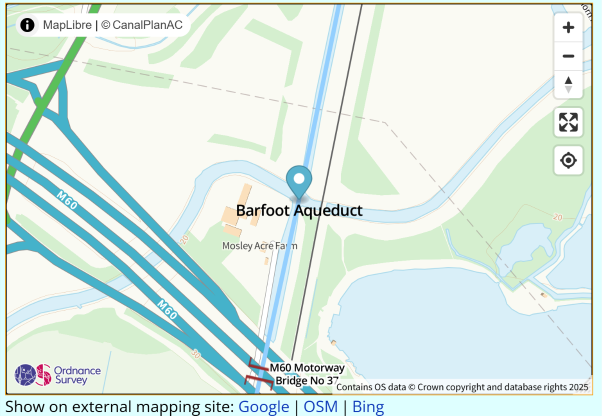
53°26’11.8″N 2°18’32.2″W – Google Maps
Waymark Code: WMNM3Z
Barfoot Aqueduct is a minor waterways place on the Bridgewater Canal (Main Line) between Stretford – Waters Meeting (Junction of Bridgewater Canal Main Line and Stretford and Leigh Branch) (1 mile and 4¾ furlongs to the north) and Lymm Bridge No 23 (Lymm, footbridge is next to road bridge) (9 miles and 1½ furlongs to the west).
Monitoring is about foresight, not just reaction. With the Barfoot Aqueduct, we’re proud to be playing a small but significant part in protecting a legacy of British engineering.
Find out more about our Monitoring services here. Speak to our team of experts to get help with your monitoring projects today.