M62 EMBANKMENT MONITORING
2025
Background
National Highways raised concerns over a section of cutting along the M62 motorway that had previously experienced slope instability. Their initial proposal for monitoring suggested the installation of approximately 150 physical survey markers set into concrete across the embankment, which would then be checked at regular intervals. While effective, this approach would have been labour-intensive, disruptive to the site, and limited in the frequency of data collection.
Overview
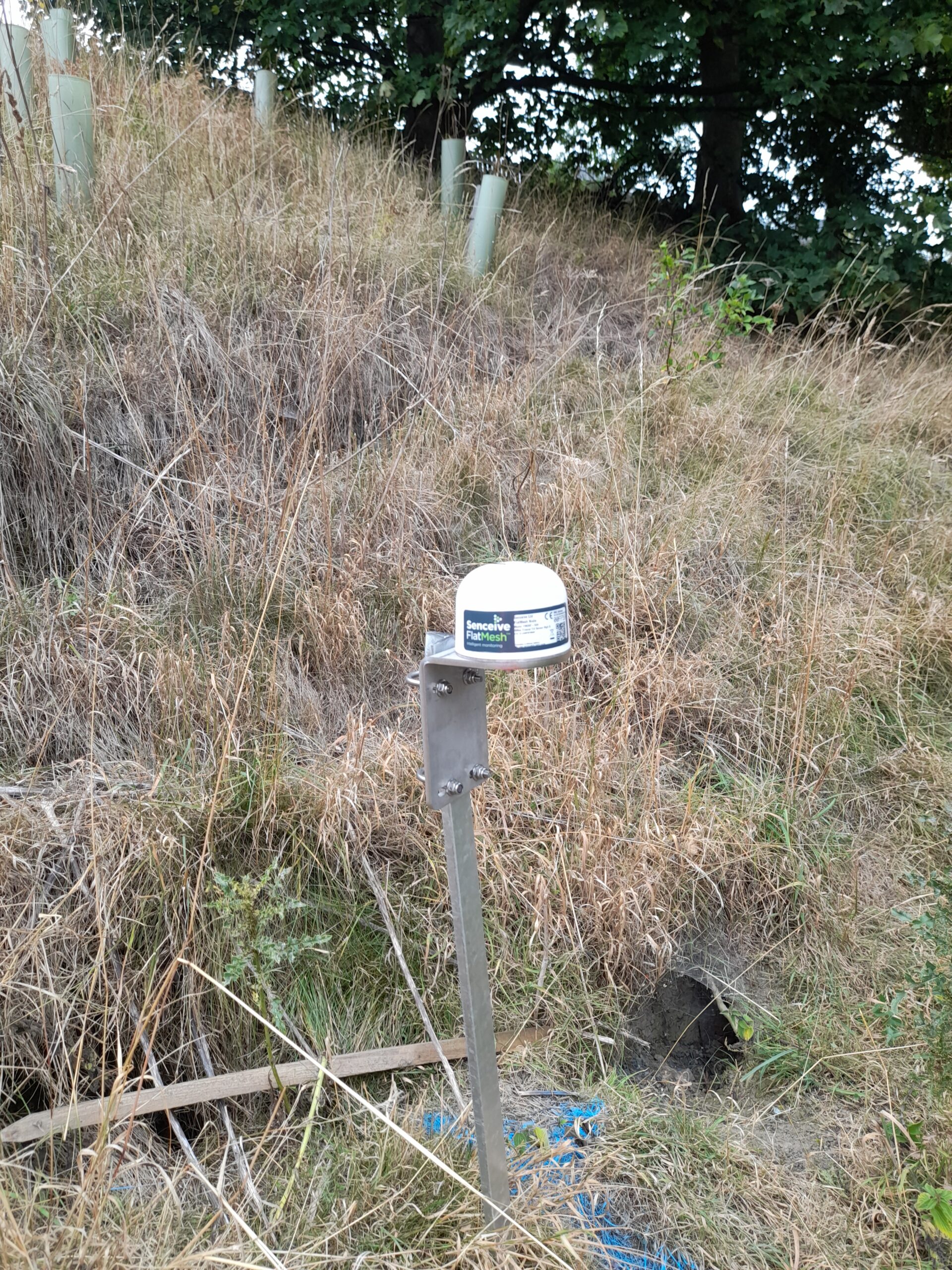
Malcolm Hughes Land Surveyors were appointed to design and implement a monitoring solution that would deliver reliable, real-time data while reducing the operational challenges associated with traditional survey methods. Following site inspections and consultation with National Highways, and Kier Malcolm Hughes proposed a remote monitoring system using wireless tilt sensors supplied by Senceive. The adoption of remote monitoring systems using sensors (specifically the Senceive FlatMesh Monitoring System) offers numerous benefits over conventional monitoring methods in this particular context.
Challenges
- Site access & safety: Frequent manual surveying would have required multiple site visits, increasing exposure of operatives to live motorway environments. The slope is also uneven with areas of failure and large cracks increasing the potential of slips and trips.
- Slope condition: The embankment had areas of known movement that required targeted, continuous monitoring.
- Data frequency: National Highways required regular updates and early warning of any significant movement to safeguard the motorway and its users.
- Discretion: Equipment had to be unobtrusive and resilient in a busy roadside environment.
Tools & Technology
The monitoring solution combined wireless tilt sensor technology with Malcolm Hughes' geospatial expertise:
- Topographic baseline: Malcolm Hughes completed a high-resolution topographic survey, providing the geospatial framework for sensor placement and monitoring. We will also be undertaking a LiDAR drone survey during the winter months to add a 3D model of the embankment.
- Sensor technology: Wireless Triaxial tilt sensors supplied by Senceive provided automated measurements.
- Survey control integration: Malcolm Hughes surveyed and referenced each sensor location into the established grid, ensuring positional accuracy.
- Data unification: Beyond the sensor feed, Malcolm Hughes brought together multiple monitoring datasets into a single dashboard for the client.
- Automated Monitoring Platform accessible via secure web access, functions as a cloud based data portal and visualisation platform.



Solutions Devised
- Established a network of 21 tilt sensors, arranged in three staggered/zig-zag rows across the slope (toe, mid-slope, and crest).
- Targeted placement in known areas of movement to maximise effectiveness.
- Configured reporting intervals at 30-minute cycles for near real-time monitoring.
- Real-time insight and alarming: Trigger values set on the secure cloud server, and if these are breached (such as the 5mm trigger alarm), alerts are sent to elected people to undertake corrective actions.
- Integrated the sensor network with Malcolm Hughes' existing survey control, ensuring accurate positional data and alignment with prior topographic surveys.
Client Benefits
- Proactive risk management: National Highways now receive continuous slope movement data without relying solely on manual inspections.
- Increased safety: Reduced the need for repeated site visits by surveyors, limiting exposure to motorway-side working conditions.
- Cost & efficiency: Avoided installing and maintaining 150 traditional monitoring markers.
- Reliability & resilience: Discreet sensors blend into the environment while operating reliably in variable weather and ground conditions.
- Scalable monitoring solution: System can be expanded or reconfigured for future monitoring requirements.
Summary
Malcolm Hughes delivered an end-to-end solution for National Highways, providing not just raw data but an interpreted monitoring dashboard that integrated multiple datasets. Sensors were strategically positioned based on a geotechnical understanding of slope behaviour, ensuring confidence in their placement. This technology was further strengthened by expert, surveyor-led oversight, transforming data into actionable insights rather than isolated information streams, providing a clear and actionable picture for National Highways.
Malcolm Hughes delivers specialist monitoring services for infrastructure, construction, and engineering projects across the UK. Monitoring matters because it provides critical, real-time insight into structural health, enabling early detection of issues, proactive risk management, informed decision-making, safety assurance, cost savings, regulatory compliance, and stakeholder confidence.
We partner with you to define the monitoring approach that best meets your project goals, ensuring accuracy, efficiency, and value at every stage. With experienced teams, proven processes, and precision technology, we work together to safeguard your critical infrastructure and deliver the outcomes that matter most to you.
Find out more about our Monitoring services here. Speak to our team of experts to get help with your monitoring projects today.
Related Services