Heritage Survey of St Albert’s Church, Glasgow
2026
Measured Building, PAS128 Utility Survey & Orthophoto of Heritage Victorian Church in Glasgow
Project name: St Alberts Church & Presbytery
Location: 143 and 180 Albert Drive, Glasgow G41 2NE, Pollokshields area of Glasgow
Client: PagePark, facilitated by the Glasgow Community Planning Partnership under Glasgow City Council, in collaboration with Southside Housing Association
Background:
Our client required comprehensive surveys of the church buildings in order to accurately document existing structures. The scope was to deliver a Measured Site survey of St Albert’s Church, a Category B listed Victorian church built in 1886-7. (Category B listing defined as: ‘Buildings of special architectural or historic interest which are major examples of a particular period, style or building type.’).
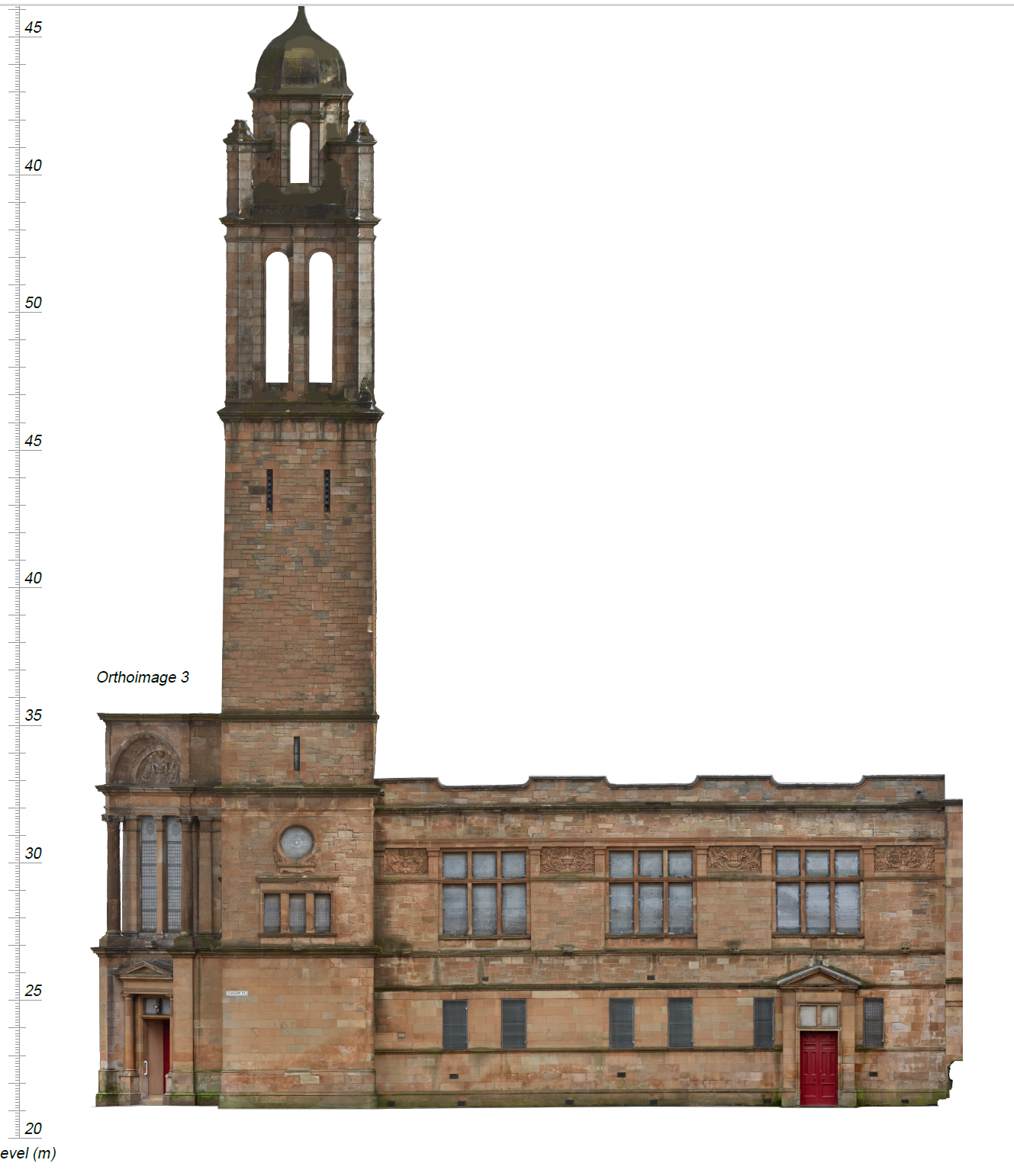
The photographs and 3D laser scan of the external facade of the building (more vital because of it being listed) can also provide the client and any contractors with a record of the current condition of the building.
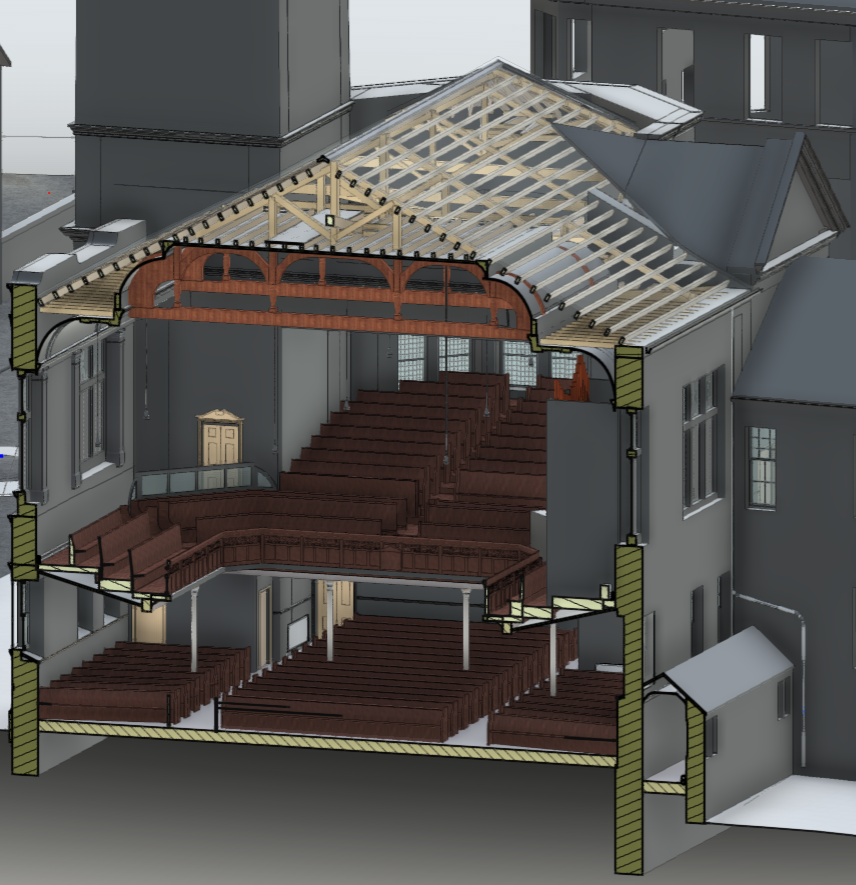
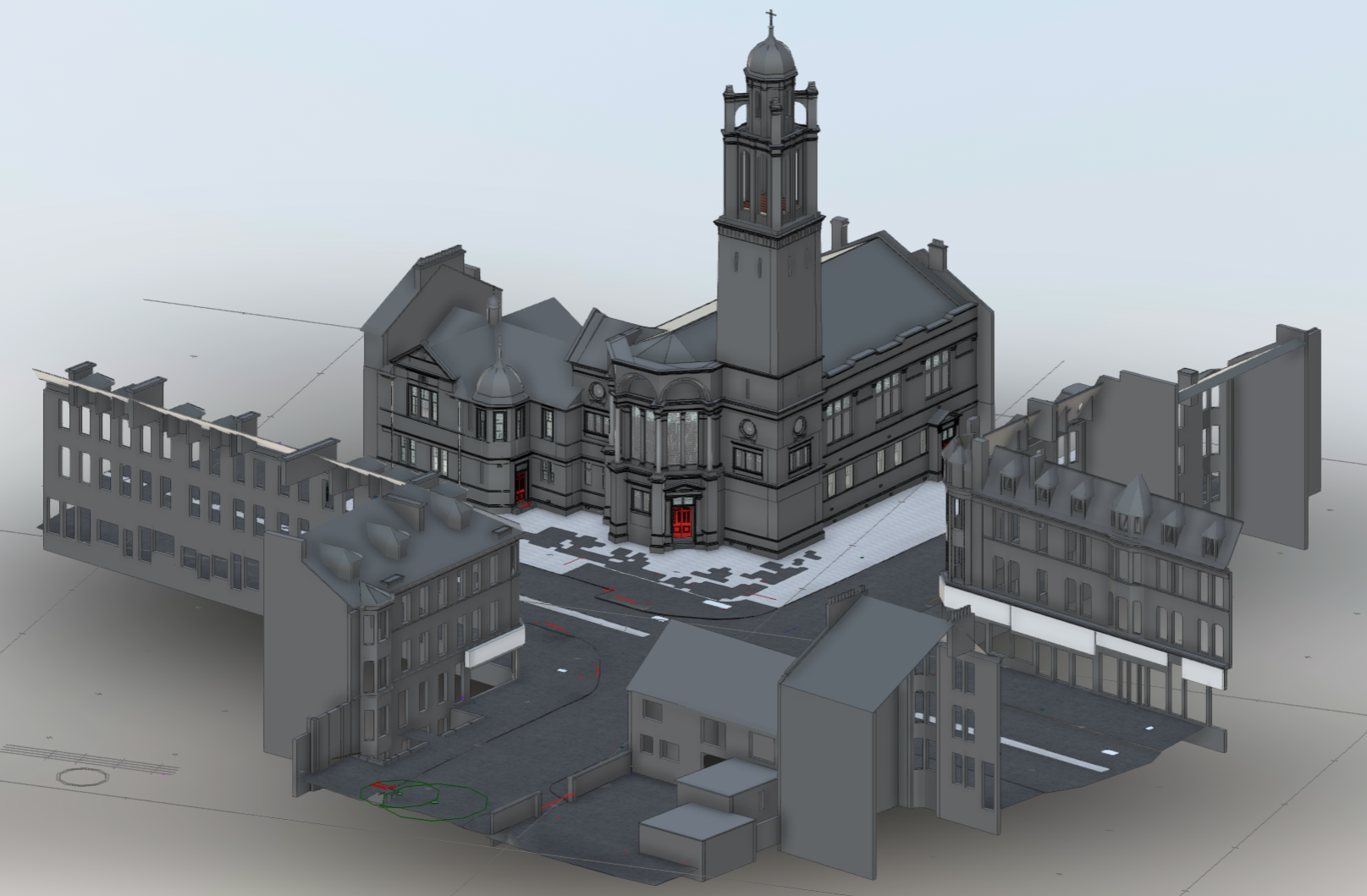
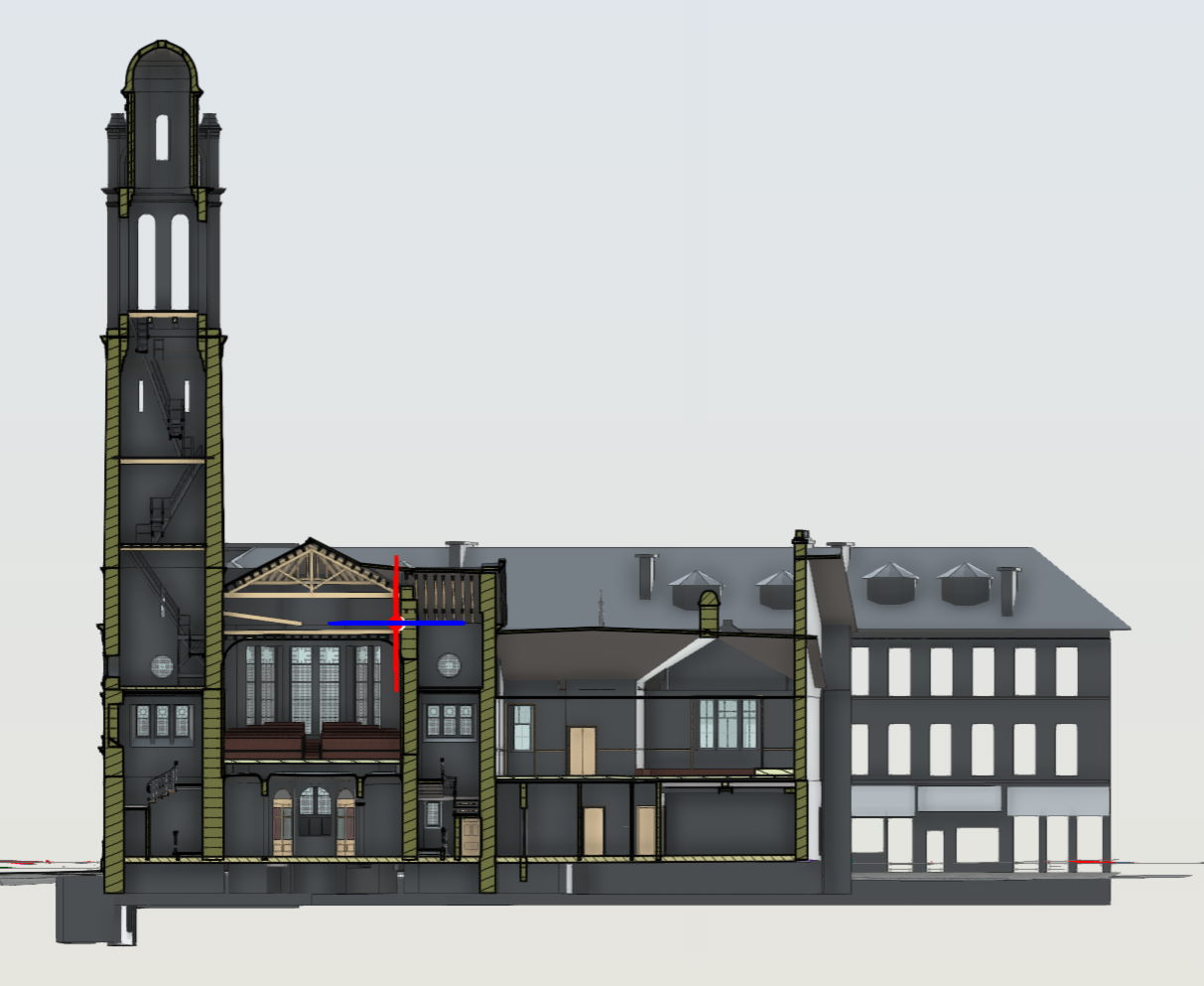
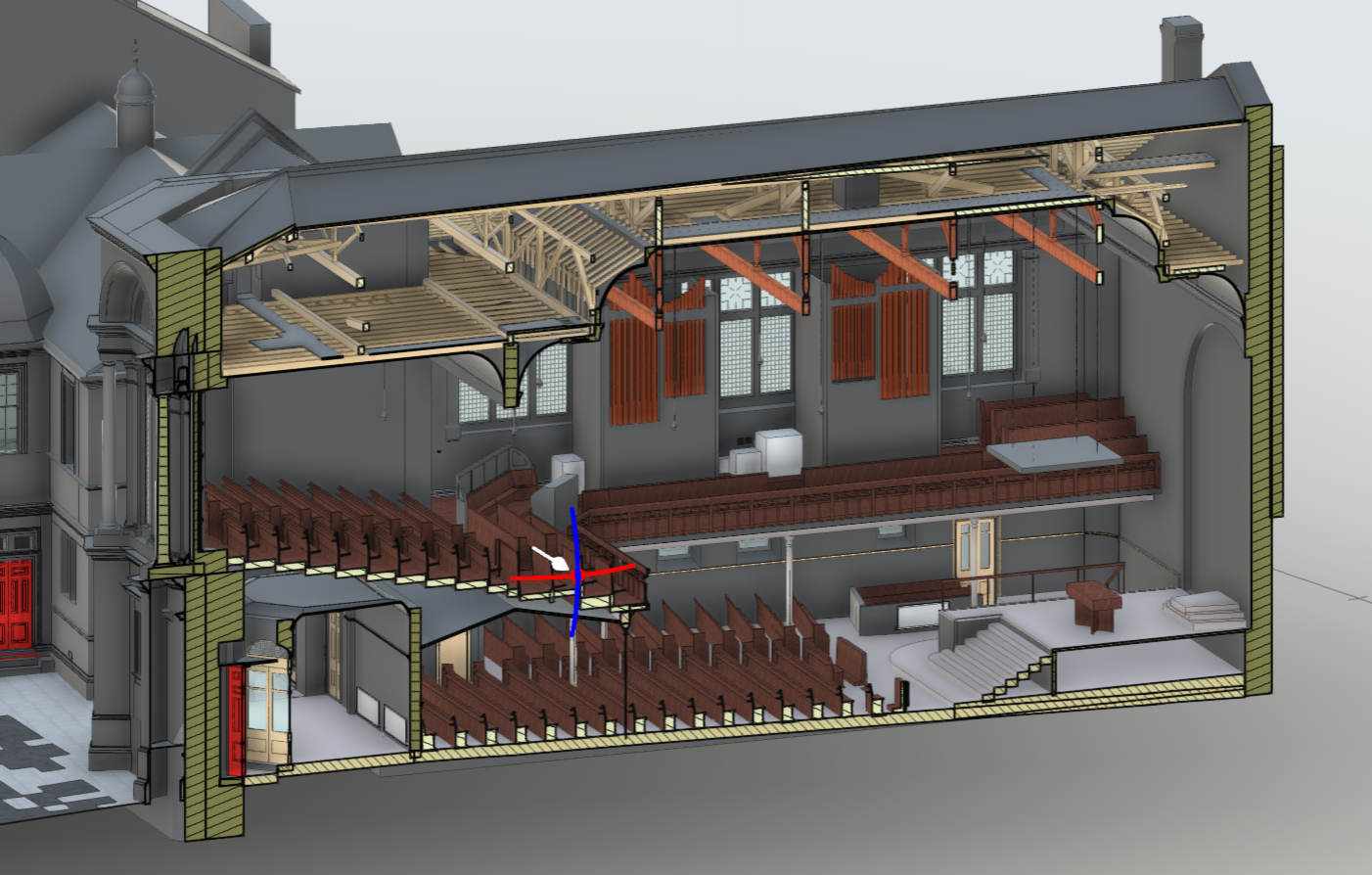
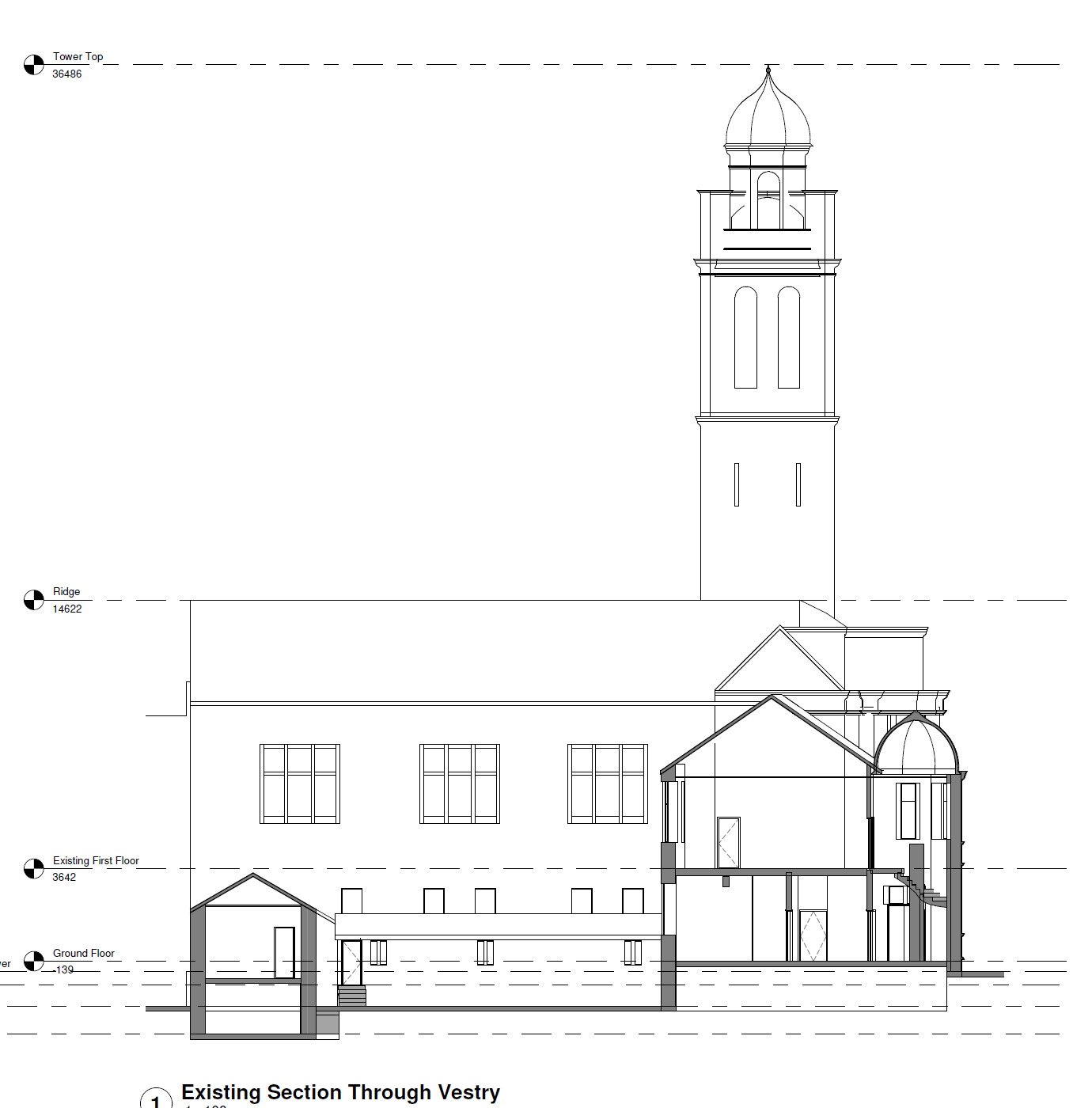
The deliverables consisted of a highly detailed 3D Revit model at LOD400, images of the exterior facades, a topographic survey and PAS128 Utility Surveys of the surrounding streets.
Key Considerations of Heritage Surveys
The purpose is to document a site’s current condition which can confirm conservation, maintenance, or alteration and ensure compliance with heritage regulations. The survey encompasses the buildings layout, and surrounding environment to provide a comprehensive record. Therefore, heritage surveys can be vital for assessing environmental impact, enabling retrofitting for energy efficiency and supporting development proposals that can affect historic properties.
Our survey can serve multiple purposes, the outputs can facilitate:
- Detailed planning proposals,
- Cost estimations for any planned developments in the pipeline
- Essential construction information
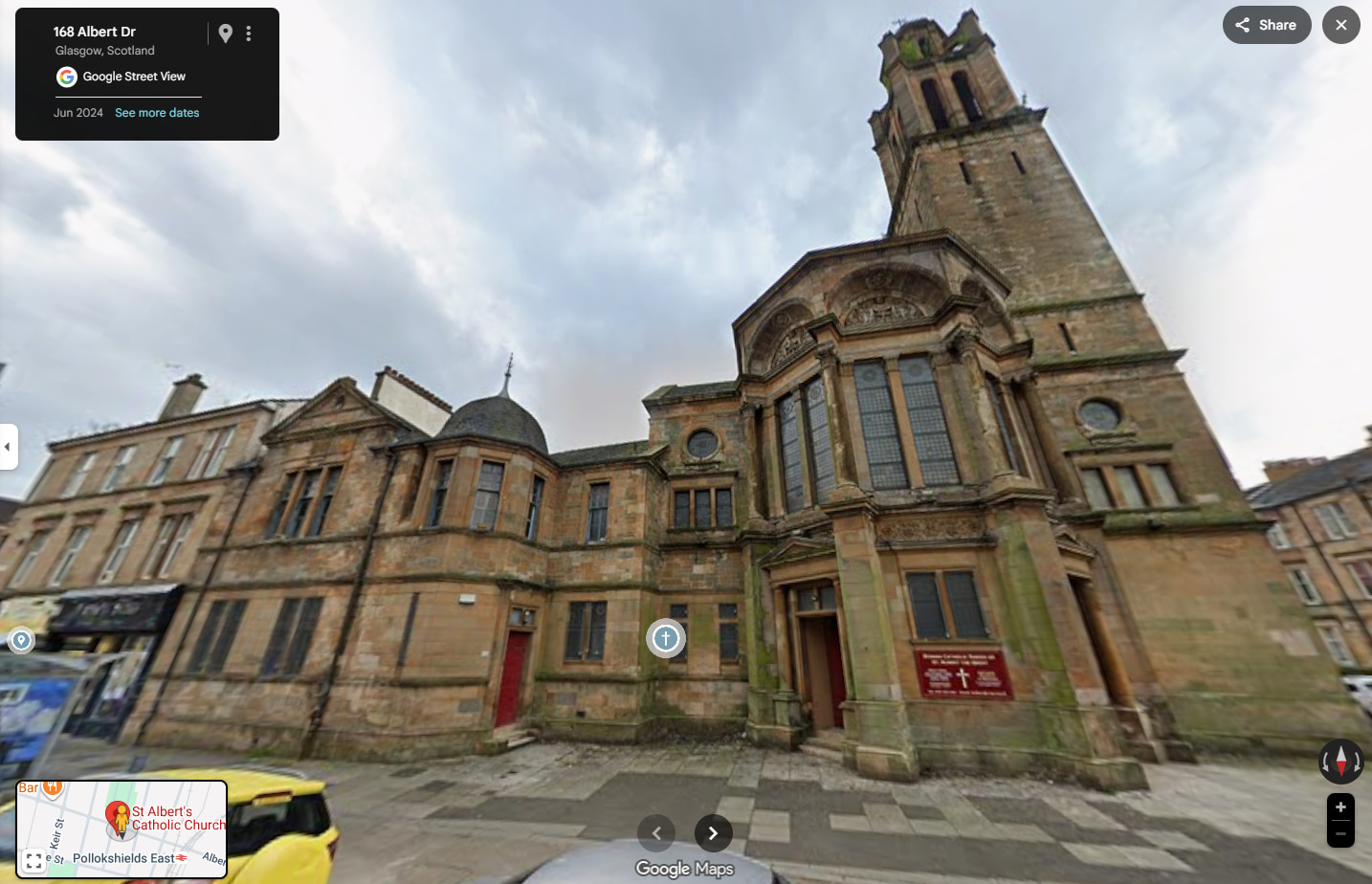
Drawing from the official descriptions provided by Historic Environment Scotland: St Alberts Church stands as an exemplar of Free Italian Renaissance Architecture. It blends artistic freedom with Renaissance influences. Its 140-foot campanile, (bell tower) which is made up of angle buttresses and paired round-arched openings, serves as a distinctive landmark. The facade facing Albert Street showcases elaborate Corinthian columns framing arched windows each adorned with intricately sculptured panels.
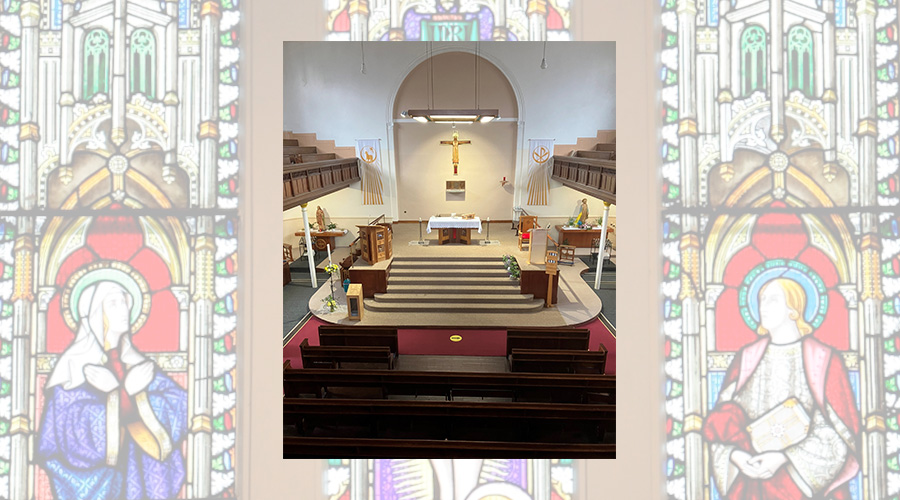
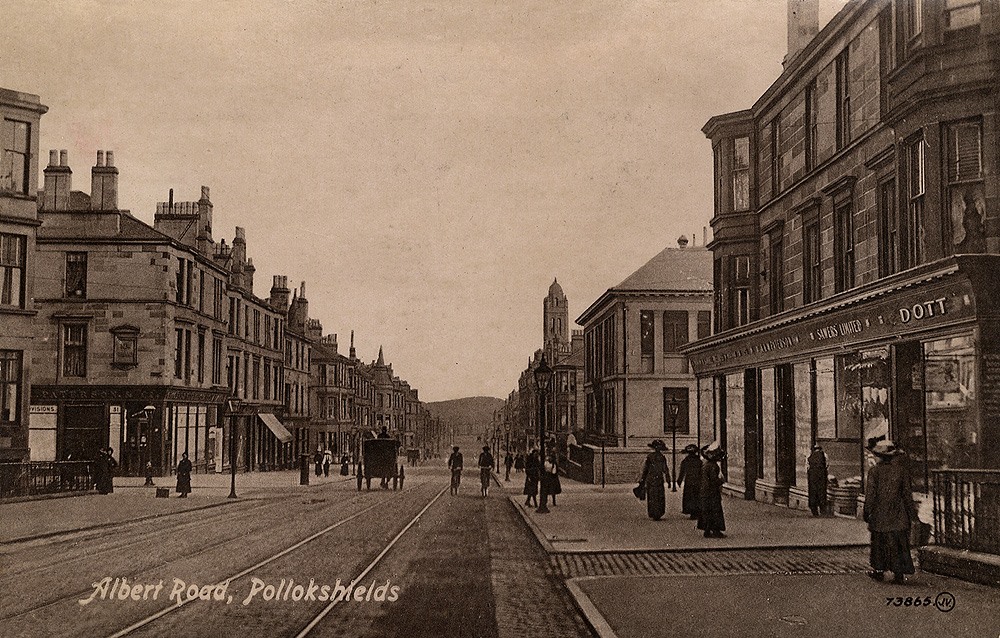
Since its establishment in 1851 as one of Britain’s earliest Garden Suburbs, Pollokshields has been home to fine architectural examples from some of the most prominent Victorian and Edwardian architects. St Alberts Church was designed by J B Wilson and built as a Presbyterian Church. It was acquired by the Archdiocese of Glasgow in 1965 for a new Roman Catholic parish, which it is still is today. (At time of writing).
Challenges:
- Surveying while remaining sensitive to the occupiers and users of the church. All access agreements were arranged with the clergy at appropriate times bearing in mind that this was a functioning church (at the time of the survey) and being considerate of those who use the space.
- The complex interior of high vaulted ceiling, intricate stonework, internal obstacles, and highly detailed elements all present significant challenges. Due to these complexities require higher data volume to carefully capture all the detail for an accurate model.
- We worked with the client to ensure that fit for purpose deliverables were provided using the most efficient workflows and reducing the scope where needed to ensure we could meet the client’s budgetary restrictions.
Approach:
- A primary control network was established around the building ensuring that data accuracy was maintained followed by a topographic and utility survey.
- Relating our data to the external control a measured survey of the interior and exterior was conducted using a 3D laser scanner to generate a point cloud, this was supplemented by photogrammetry to help capture the ornate detail of the building enabling adherence to the LOD400 requirement.
- Owing to the complex structure we opted to use 3D meshing tools to help form some of the components of the model as this provides a high level of detail whilst maintaining a close eye on cost control and timescale. To ensure that our client was ultimately provided with the data that they needed and informing the team appropriately.
Summary
This was a multi-disciplinary project and showcased a great cross section of our teams’ capability, coming together to deliver the right product for the client. Delivered to specification and in a timely manner. Showcasing the combination of skills and abilities across the team to deliver complex heritage surveys.
Beyond its immediate practical use, this survey contributes to the broader understanding of the local architectural heritage and urban development. By utilising these methodologies and technologies, we are not only preserving the past, but are laying the groundwork to safeguard the shared cultural heritage for future generations.
If you’re planning works to a listed or historic building and require accurate heritage, measured building or PAS128 utility surveys, get in touch with our team to discuss how we can support your project with expert advice and tailored survey solutions.
Related Services