The execution of modern transport infrastructure projects and the management of existing assets is experiencing a major transformation. As networks expand and assets age, the engineering challenges surrounding them grow exponentially more complex.
Today’s transport projects are dictated by compressed delivery programmes, stringent regulatory oversight, and an unforgiving spotlight on public and workforce safety.
In this environment, managing risk is about visibility just as much as it is about robust design and skilled contracting. Relying on historical data or periodic structural health checks is rapidly becoming a liability. For project managers and infrastructure owners alike, the ability to continuously monitor and react to physical changes in real time is a critical operational necessity.
Infrastructure monitoring as a result of construction activities
As a result of planned construction works in a particular area, structures and ground features can be monitored to ensure that any movement which occurs is in line with the expected tolerances set by the project. A zone of influence will be calculated by a structural engineer so stakeholders can ascertain the expected movement that will occur due to the construction activities.
An example of this is excavation and piling. Unloading and loading of the ground through demolition work and construction will cause movement in the ground surface and can potentially affect structural foundations.
While some movement will be expected and acceptable, excessive movement may cause adjacent structures to be damaged or even collapse. Monitoring enables us to accurately monitor this movement so that interventions can be used at the appropriate time to prevent further movement from exceeding any thresholds set.
The cost of delayed infrastructure data
Operating a major infrastructure project without continuous, up-to-date monitoring data introduces a level of risk that few modern organisations can afford to absorb.
When project teams lack real-time visibility, they are forced into a reactive posture, responding to crises rather than managing variables.
Delays and escalating costs
In major linear infrastructure projects, a delay in one sector triggers a costly domino effect across the entire programme. If unexpected ground movement is suspected but cannot be immediately quantified, work must be halted out of an abundance of caution.
Without immediate data to verify or disprove the risk, these precautionary shutdowns can stretch for days, resulting in idle plant, disrupted supply chains, and compounding contractual penalties.
Furthermore, remediating a structural issue after significant movement has occurred is invariably more expensive than stopping that movement in its infancy.
The operational and reputational toll
Beyond the immediate financial hit, asset failures or prolonged project shutdowns severely disrupt transport networks, leading to public dissatisfaction and intense political scrutiny.
For bodies like rail operators or local authorities, unplanned network closures damage public trust and violate strict service-level agreements.
Safety and liability
The most critical hazard of data delays is safety. Transport infrastructure often cuts through complex urban environments or fragile geotechnically sensitive terrains. Unmonitored structural shifts can lead to catastrophic failures, endangering both construction crews and the public.
From a legal and regulatory standpoint, operating without rigorous, continuous asset protection protocols leaves organisations highly exposed to liability and breach of safety compliance.
Where real-time monitoring is commonly used
Infrastructure monitoring demands a tailored approach, designed specifically around the unique risk profiles of different engineering environments. Across the transport sector, this targeted, continuous visibility is proving indispensable in several high-risk domains.
Bridge and viaduct structural monitoring
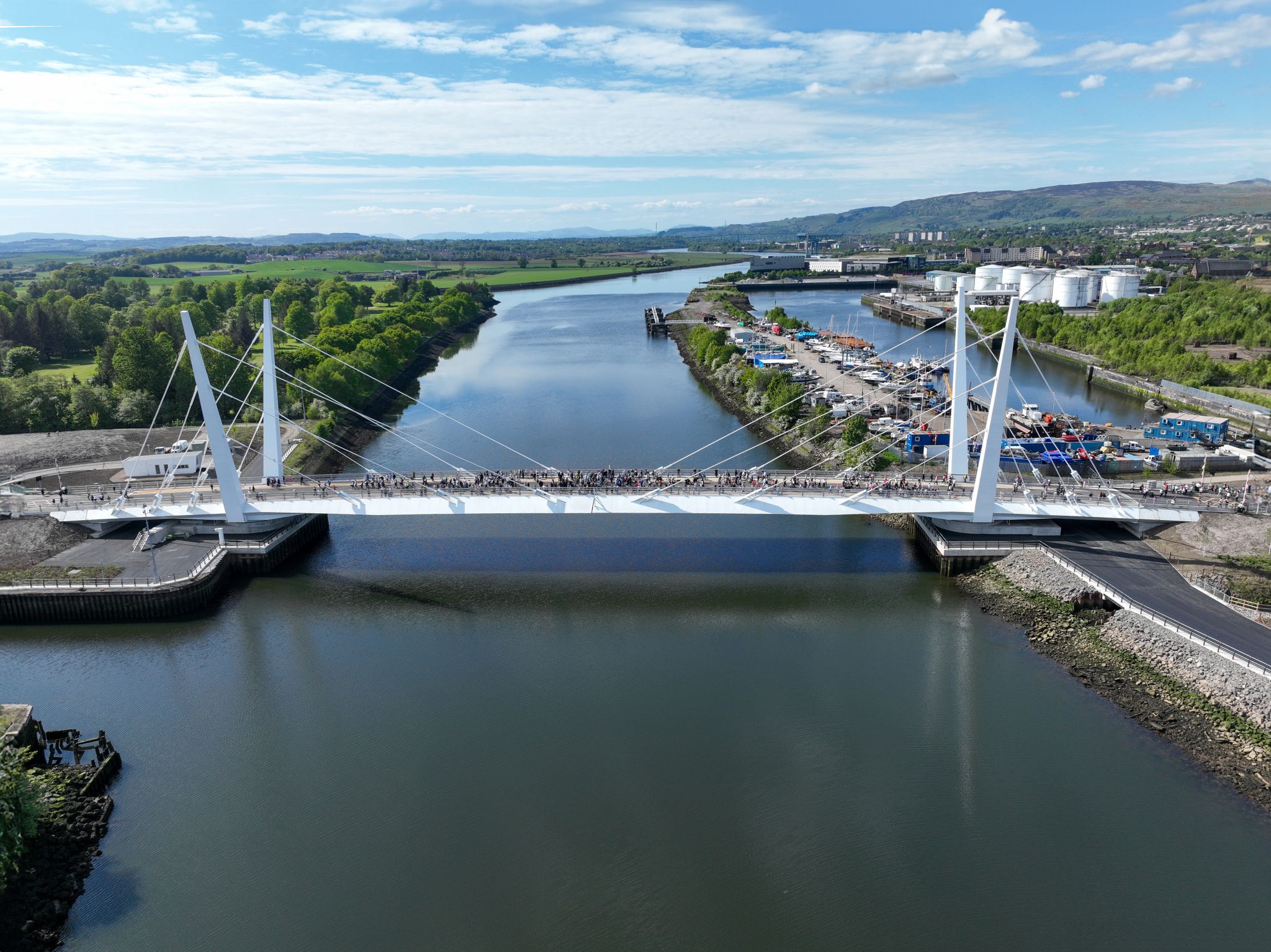
Bridges are subject to complex, compounding stresses: thermal expansion, dynamic traffic loading, and environmental degradation.
Structural monitoring systems track tilt, displacement, strain, and vibration in real time. This ensures that any structural anomalies (regardless of the cause) are flagged instantly and this preserves the integrity of vital crossing points.
Embankment and cutting stability
Earthworks can be unpredictable, particularly when subjected to the extreme and erratic weather patterns seen in recent years. Landslips, slope failures, and embankment settlements pose severe threats to highways and rail corridors.
Continuous geotechnical monitoring tracks pore water pressure, soil moisture, and lateral earth movement, providing early warnings of slope instability long before a failure occurs.
Rail infrastructure protection
The rail environment demands unparalleled precision. Even microscopic changes in track geometry (such as twist or vertical alignment) can lead to speed restrictions or even derailments in worst-case scenarios.
Rail surveys using automated track monitoring systems ensure that rail operators maintain a constant handle on track stability during adjacent tunnelling, excavation, or utility installations.
Highways and pavement integrity
Modern highway smart networks require pavements and retaining structures that can withstand relentless heavy goods vehicle loading.
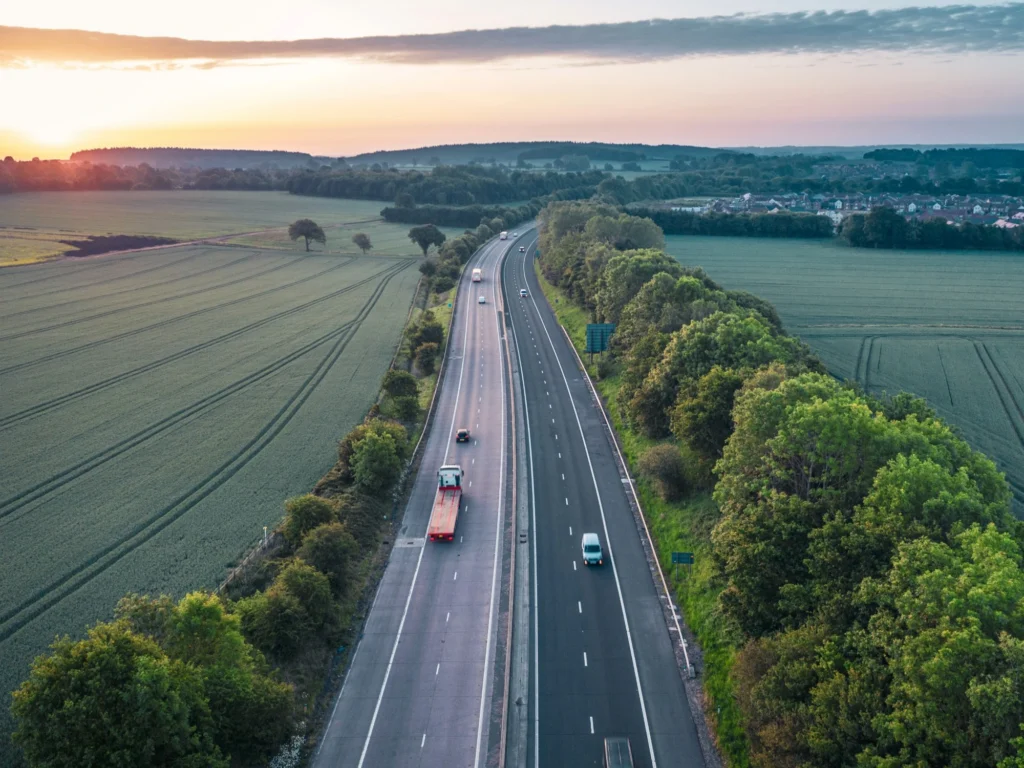
Real-time highway surveys allow authorities to track how retaining walls and bridge abutments respond to live traffic loads and environmental changes, facilitating predictive maintenance rather than disruptive emergency repairs.
Construction adjacent to existing assets
As urban spaces become more congested, new transport links must routinely be built alongside, over, or underneath existing infrastructure.
Projects that involve tunnelling beneath an active rail line or excavating adjacent to a historic building will benefit from the digital shield that real-time monitoring creates.
It provides instant feedback to engineering consultancies and contractors, confirming whether third-party assets remain stable as construction progresses.
The value of real-time monitoring
The value of implementing continuous structural and environmental monitoring extends far beyond risk mitigation.
When integrated into the core strategy of a project, it serves as a powerful driver of efficiency and long-term asset value.
Optimising project delivery and programmes
Real-time infrastructure data empowers project managers to safely push boundaries. Rather than engineering excessively slow-moving construction methods out of fear of the unknown, teams can work confidently to tighter tolerances.
If data shows that adjacent structures are completely unaffected by current construction methods, work can proceed at pace, or even be accelerated, with total confidence.
Cultivating a proactive safety culture
A safe site is an informed site. Real-time data streams can be configured with multi-tiered alert thresholds (such as amber and red triggers). If movement breaches a pre-set safe parameter, automated alerts are sent instantly to site managers via SMS or email.
This allows teams to implement pre-planned contingency measures and even evacuate work zones if necessary. Or, this consistent monitoring can adjust engineering techniques before the asset undergoes irreversible damage. It transforms safety from a reactive protocol into an active, data-driven discipline.
Enhancing long-term asset management
The utility of monitoring data does not expire when the construction phase concludes. The continuous datasets captured during a project provide an invaluable baseline asset health record for infrastructure owners.
This digital record allows local authorities and operators to understand exactly how an asset behaves under load from day one.
Over time, this data supports predictive maintenance models, allowing owners to target capital expenditure precisely where it is needed, extending the operational lifespan of the infrastructure.
Empowering stakeholders with confident decision-making
As transport networks face the dual pressures of modernisation and climate resilience, the margin for error on engineering projects has shrunk to zero. Relying on outdated, sporadic visibility is an operational gamble that compromises safety and risks project delays.
Real-time infrastructure monitoring bridges the gap between uncertainty and control. By providing continuous, high-fidelity visibility into structural and geotechnical behaviour, it empowers project teams to protect surrounding assets, safeguard the workforce, and keep delivery schedules firmly on track.
How Malcolm Hughes Land Surveys can help
At Malcolm Hughes, we help project teams move from reactive risk management to proactive asset protection.
Through advanced monitoring technologies, surveying expertise, and real-time data insights, we support safer construction, more efficient project delivery, and long-term infrastructure resilience.
Whether you’re managing rail, highways, bridges, or large-scale transport infrastructure projects, our tailored monitoring solutions provide the continuous visibility needed to identify risks early, protect critical assets, and maintain confidence throughout delivery.
Contact our team today to find out how our infrastructure monitoring solutions can help safeguard your next transport project.