What is a monitoring survey and when is it needed?
In infrastructure, movement matters. Even the smallest shift in structural or geotechnical features can have massive implications for safety, compliance, and long-term asset performance.
A monitoring survey is used to measure and track this movement, deformation, or structural and geotechnical change over time. From rail networks and highways to retaining walls, bridges, commercial developments, and excavation works, monitoring enables the identification of potential issues early. This means stakeholders can make informed decisions before problems escalate. As projects become more complex and expectations around compliance continue to rise, a monitoring survey plays an increasingly important role in protecting people, infrastructure, and investment.
Historically, monitoring was a tool used primarily during active construction, whereas today it is increasingly relied upon to extend the life of aged assets past their original design life. Much of the UK’s infrastructure network dates from major expansions in the late 19th and 20th centuries. As highlighted by the National Engineering Policy Centre (NEPC), our built environment is facing an escalating crisis of asset deterioration.
The scale of this challenge is staggering:
- 17% of the local road network in England and Wales is already in poor condition.
- Congestion and deteriorating road surfaces cost the UK economy an estimated £30 billion per year.
- 25% of all rail delays are caused by faults with infrastructure assets.
- Climate pressures are accelerating this decay, causing a 50% increase in severe weather impacts on infrastructure assets over the past five years alone.
Network Rail alone manages over 20,000 miles of track, 30,000 bridges, tunnels, and viaducts, and 190,000 earthwork assets (including 100,000 embankments), many of which are over 150 years old.
To navigate budget restrictions, the industry strategy must pivot from reactive management to proactive.
Fortunately, rapid advancements in monitoring sensors and technologies have transformed how we track structural health. Organisations can now deploy asset-imaging and monitoring technologies at scale. This provides the trustworthy data needed to establish precise asset conditions. When integrated into the decision-making process, these digital tools offer predictive insights that enable targeted, preventative action before a critical failure occurs.
At Malcolm Hughes Land Surveyors (MHLS), we have 50 years of experience delivering monitoring surveys nationwide, Malcolm Hughes supports clients across the infrastructure, construction, and development sectors with reliable, consultancy-led surveying solutions tailored to each site and project requirement.
What is a monitoring survey?
A monitoring survey is a specialist surveying process used to observe and record movement or positional change within structures, land, or assets over a period of time. The purpose is to detect movement accurately, assess stability, and provide actionable data that supports safe project delivery and asset management.
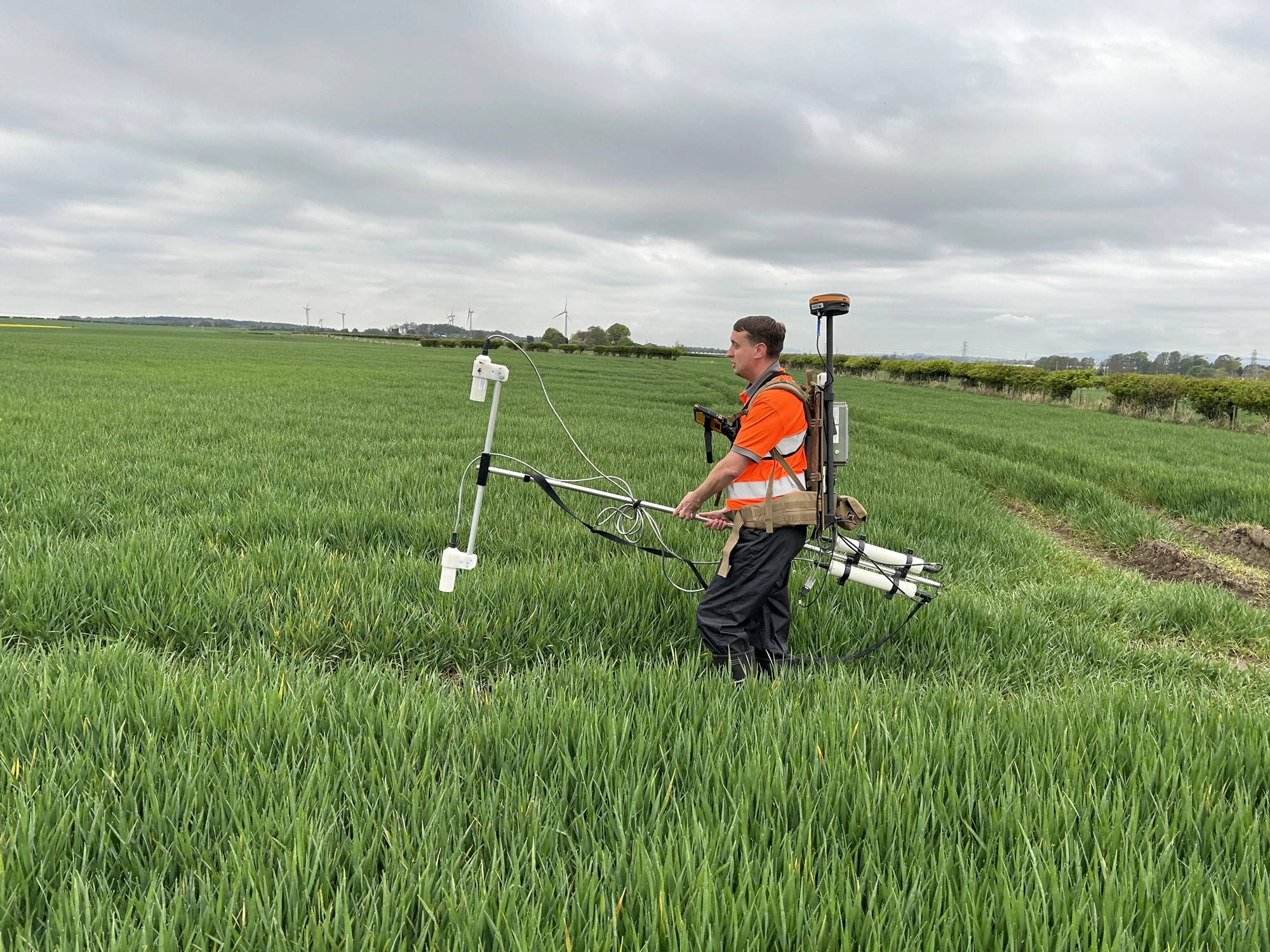
Monitoring can be carried out manually at scheduled intervals or continuously through automated systems that collect real-time data. Surveyors establish a network of monitoring control points and use precise instrumentation and sensors to monitor deformation and any changes in position, height and alignment.
The results can then be analysed to identify trends, monitor structural behaviour and determine whether movement falls within acceptable tolerances.
A monitoring survey may be required for:
- Buildings adjacent to excavation works
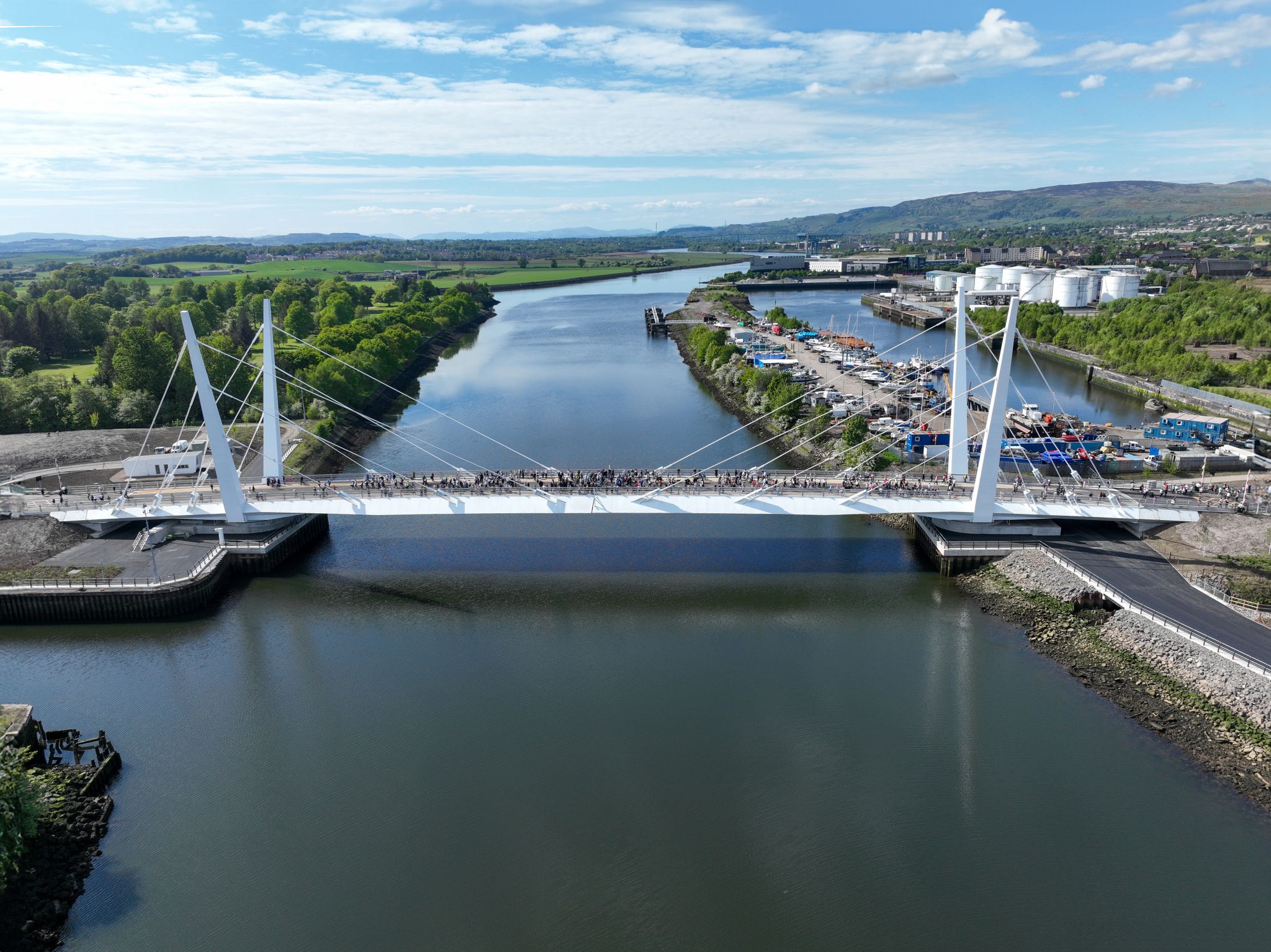
- Bridges, tunnels, and highways
- Rail infrastructure
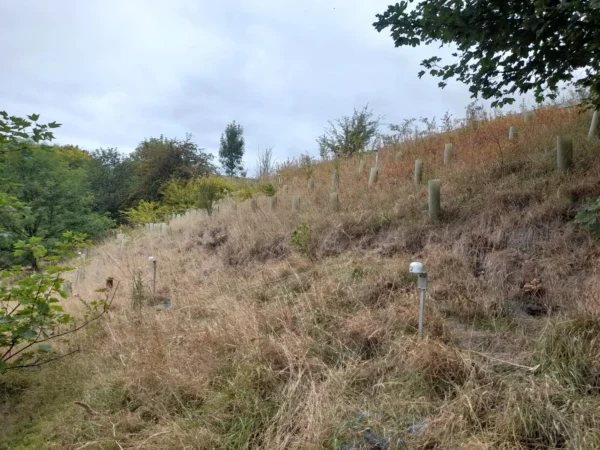
- Retaining walls and embankments
- Historic or sensitive structures
- Large-scale construction projects
- Ground movement or subsidence investigations
- Temporary works monitoring
- Flood defence infrastructure
- Dams and other water related infrastructure
- Any features or structures which are sensitive to movement or are unstable
Monitoring strategies are tailored to the risks, environment, and engineering requirements of each project so that stakeholders receive accurate and meaningful data throughout the monitoring period.
Because every site presents different risks and operational challenges, monitoring strategies are typically tailored to the specific engineering and environmental conditions involved.
Why monitoring surveys are important
Structural movement is not always visible to the naked eye. In many cases, small shifts occur gradually over time before developing into larger issues that can impact safety, budgets, and project delivery.
Monitoring surveys provide an early warning system that enables engineers, contractors, and asset owners to identify abnormal movement before it escalates. By detecting change early, organisations can take corrective action quickly, helping to reduce delays, avoid costly remediation work, and minimise risk.
Monitoring also plays an important role in project accountability and regulatory compliance. Infrastructure owners and contractors are increasingly expected to demonstrate that assets are being safely managed throughout construction, maintenance, and operational phases.
Reliable monitoring data provides measurable evidence that structures are behaving as expected and that risks are being appropriately controlled. For major transport and infrastructure schemes, monitoring has become an integral part of modern project management.
Whether assessing the impact of excavation works near operational rail lines or monitoring long-term movement in bridges and retaining structures, accurate surveying data supports informed decision-making throughout the project lifecycle.
Different types of monitoring surveys
There are several types of monitoring surveys used across construction and infrastructure projects, each designed to assess different forms of movement or structural behaviour.
Structural monitoring
Structural monitoring focuses on buildings, bridges, retaining walls and other built assets. The aim is to identify any movement, cracking, tilting, or deformation that may indicate structural stress or instability.
This type of monitoring is commonly used during nearby demolition, piling, tunnelling, or excavation works where surrounding assets could be affected.
Deformation monitoring
Deformation monitoring measures changes in shape, position or dimensions within a structure or land surface over time. It is widely used on infrastructure projects, embankments, dams, and large engineering structures where movement could impact operational safety.
Surveyors compare repeated measurements against baseline data to identify any changes that exceed acceptable tolerances.
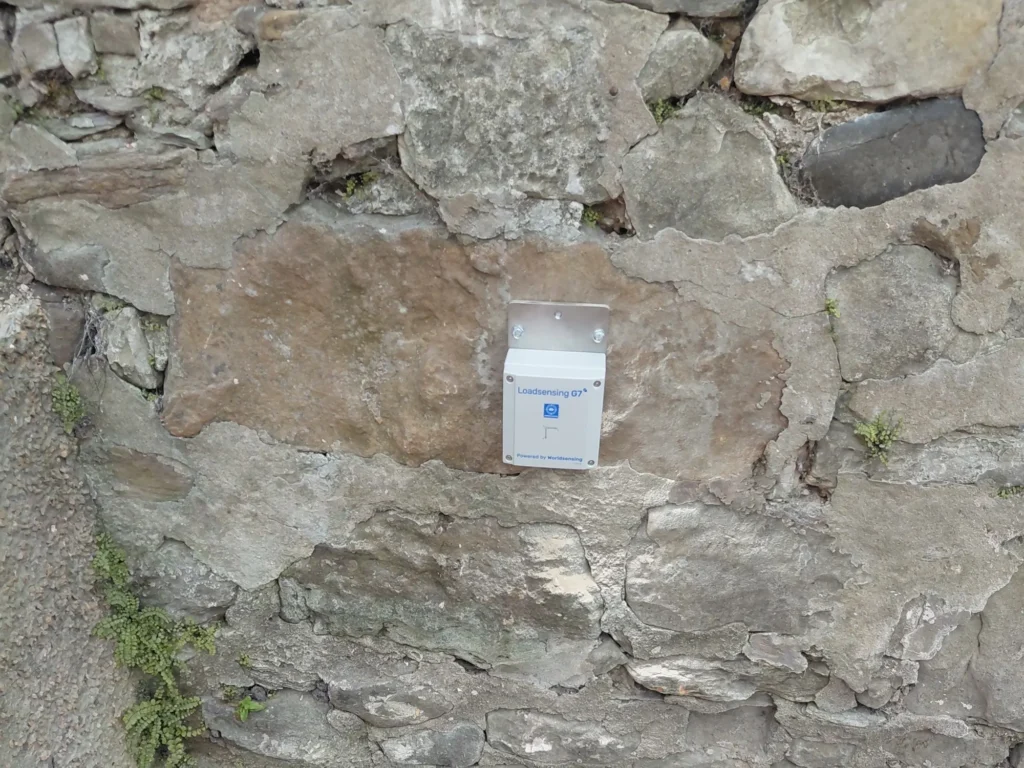
Settlement monitoring
Settlement monitoring tracks vertical movement or subsidence within the ground or structures. This is particularly important where excavation, tunnelling, or ground improvement works are taking place.
Settlement monitoring is often used on urban construction projects where nearby buildings or utilities could be affected by ground movement.
Rail and highway monitoring
Transport infrastructure requires highly accurate monitoring to maintain safe operations and minimise disruption. Rail corridors, highways, bridges, and tunnels are regularly monitored to identify movement caused by construction activity, vibration, environmental conditions or structural fatigue. Understanding track alignment and any deviation outside of the expected tolerance can have catastrophic consequences including the derailment of trains
This often involves automated systems capable of providing continuous real-time alerts.
Environmental and geotechnical monitoring
Environmental monitoring assesses how external factors such as groundwater, slope instability, or soil conditions affect infrastructure and construction projects. Geotechnical monitoring may include slope movement analysis, embankment stability monitoring, or flood defence assessment.
Where monitoring surveys are commonly required
Monitoring plays a critical role across a wide range of sectors and project types.
Infrastructure projects
Major infrastructure schemes often require long-term monitoring due to the scale, complexity and operational risks involved. Highways, railways, tunnels, and utilities all rely on accurate monitoring data to maintain safety and performance.
Government bodies, transport authorities and contractors frequently use monitoring surveys during construction and maintenance phases to manage risk and maintain compliance.
Construction and development
Construction projects involving excavation, basement works, piling or demolition often require surrounding structures to be monitored throughout the programme. Monitoring provides reassurance that nearby buildings, roads, and utilities are not being adversely affected by construction activities.
Rail and transport
Rail environments demand particularly stringent monitoring standards due to the potential safety implications of movement or deformation near operational assets.
Monitoring systems can be used to track bridge movement, embankment stability, track alignment, and temporary works throughout infrastructure upgrades and maintenance projects.
Defence and security
Sensitive defence infrastructure requires precise monitoring to maintain operational integrity and security compliance. Monitoring may be used on military facilities, airfields, or critical infrastructure projects where movement could impact safety or performance.
Commercial and industrial sites
Large industrial facilities, warehouses, and manufacturing environments may require monitoring where heavy loading, vibration, or nearby construction could affect structural stability. Monitoring can also support asset management and maintenance planning for ageing infrastructure.
The risks of not implementing monitoring surveys
Failing to implement appropriate monitoring can expose projects and organisations to serious operational, financial, and legal consequences.
Without accurate monitoring data, movement might go undetected until visible damage or structural failure has already occurred. At that stage, remedial work is often more disruptive, more expensive, and significantly harder to manage.
The absence of reliable monitoring can also create uncertainty across a project team. Engineers, contractors, and asset owners may struggle to assess whether structures are behaving as expected, increasing the likelihood of delays, disputes, or overly cautious decision-making that impacts programme delivery.
In high-risk environments such as rail corridors or major infrastructure projects, insufficient monitoring can also lead to safety concerns affecting workers, the public, and operational assets. Regulatory breaches, insurance complications, and reputational damage may follow if organisations are unable to demonstrate that appropriate risk controls were in place.
A proactive monitoring strategy helps minimise these risks by providing continuous visibility into structural behaviour and site conditions throughout a project.
Technology used in modern monitoring surveys
Advancements in surveying technology have transformed the way monitoring surveys are delivered. Modern equipment allows surveyors to capture highly accurate data more efficiently while enabling continuous monitoring in complex environments.
Today’s monitoring projects often utilise a combination of robotic total stations, GNSS technology, laser scanning systems, digital levels, and remote sensors to collect precise positional data. Automated monitoring systems are increasingly common on infrastructure projects where continuous observation is required.
These systems can transmit real-time data directly to project teams and generate alerts if movement thresholds are exceeded. This allows engineers and contractors to respond quickly to changing conditions without waiting for manual site inspections or scheduled survey visits.
Technology has also improved the accessibility and usability of monitoring data. Cloud-based reporting platforms and remote dashboards allow stakeholders to review live information, analyse trends and support decision-making from virtually any location.
As monitoring requirements continue to evolve, our experienced team remains committed to investing in advanced surveying technology that supports accurate, reliable, and efficient project delivery.
The role of monitoring surveys in health & safety and compliance
Health and safety remains one of the primary reasons monitoring surveys are implemented across infrastructure and construction projects.
Construction sites and operational transport networks often involve environments where structural movement could create risks for workers, nearby assets or members of the public. Monitoring provides measurable evidence that structures remain stable and that any changes are identified quickly before they become safety-critical.
Monitoring surveys also help organisations meet regulatory and contractual obligations. Many infrastructure projects require ongoing monitoring as part of engineering specifications, temporary works procedures or environmental compliance measures. Monitoring data can support audits, demonstrate due diligence and provide a documented record of asset behaviour over time.
Automated systems are particularly valuable in high-risk environments because they can provide immediate alerts if movement exceeds predefined thresholds. This enables rapid intervention and helps project teams maintain safe working conditions throughout the duration of a project.
How ongoing monitoring supports infrastructure projects
Large infrastructure projects often continue over extended periods, meaning conditions can change significantly throughout construction and operational phases. Ongoing monitoring provides project teams with continuous insight into how structures and surrounding environments respond to these changing conditions.
This long-term visibility supports more informed engineering decisions, improves risk management and helps maintain confidence across stakeholders. Monitoring data can be used to validate design assumptions, protect adjacent assets and support phased construction activities without compromising safety or operational performance.
Automated monitoring has become particularly important on nationally significant infrastructure schemes where uninterrupted data collection and rapid reporting are essential. Real-time monitoring enables project teams to respond proactively to movement trends while reducing the need for repeated manual intervention.
We have extensive experience supporting complex infrastructure environments through advanced monitoring solutions. Our M62 automated monitoring project perfectly demonstrates how automated systems can provide reliable, real-time data to support safe and efficient project delivery on major transport infrastructure.
Speak to Malcolm Hughes about your monitoring needs
Whether supporting a major infrastructure scheme, monitoring structural movement during construction, or implementing automated systems for long-term asset management, choosing the right surveying partner is critical.
A professionally managed monitoring survey can help improve safety, reduce risk, support compliance and provide confidence throughout every stage of a project.
Malcolm Hughes Land Surveyors provides specialist monitoring expertise backed by advanced technology, experienced survey professionals and nationwide delivery capabilities. To discuss your project requirements or learn more about tailored monitoring solutions, contact the team today.